Ghana Secures $100 Million Investment to Become Africa’s First AI-Powered Agri Hub.
TECHNOLOGY
8/27/20253 min read
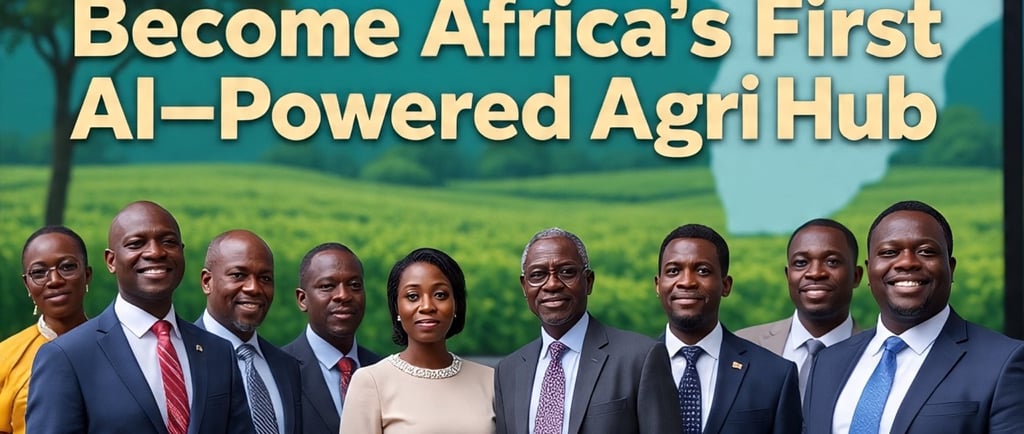
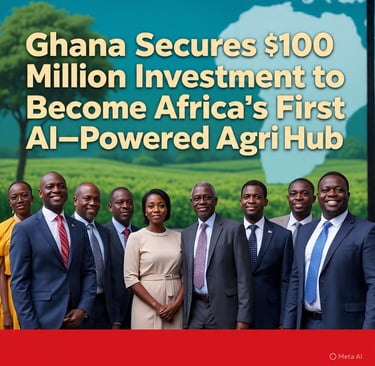
Ghana is poised to become Africa's first AI-powered agricultural hub with a $100 million investment ploughed towards transforming the nation's agricultural sector.This landmark deal, secured through a partnership with Degas Limited, a Japanese agribusiness firm, marks a pivotal moment for Ghana’s economy and its ambitions to modernize agriculture. Announced by President John Mahama following discussions with Degas CEO Doga Makiura in Yokohama, the investment will unfold over four years, aiming to empower smallholder farmers, enhance food security, and create jobs, particularly for the youth. This bold step not only underscores Ghana’s commitment to innovation but also sets a precedent for other African nations striving to leverage technology for agricultural advancement.The significance of this milestone cannot be overstated. Agriculture employs over 50% of Ghana’s workforce, yet the sector has long grappled with inefficiencies, low yields, and limited access to modern tools. Degas Limited, which has already supported over 86,000 smallholder farmers across 122,000 acres, has demonstrated tangible impact, doubling farmers’ incomes with a 95% success rate in its programs. By integrating AI-driven solutions—such as precision farming, predictive analytics for crop yields, and data-driven supply chain optimization—this investment will strengthen value chains and reduce post-harvest losses, a chronic issue costing African farmers billions annually.
For Ghana, this positions the nation as a leader in agricultural innovation, potentially attracting further foreign investment and fostering economic resilience.The partnership with Degas aligns with Ghana’s broader vision of digital transformation. AI tools will enable farmers to make informed decisions, from selecting optimal planting times to managing soil health, ultimately boosting productivity. The initiative also prioritizes youth employment, addressing a critical challenge in a country where 60% of the population is under 30. By training young Ghanaians in AI and agribusiness, the hub will create a skilled workforce, driving both economic growth and social stability.
This model could inspire similar efforts across Africa, where agriculture remains a cornerstone of many economies.Other African nations are also making strides in tech-driven agriculture, though Ghana’s scale is unprecedented. Kenya, for instance, has embraced mobile-based platforms like M-Pesa to provide farmers with access to credit and market information, boosting productivity for smallholders. Nigeria’s AgriTech sector has seen startups like Farmcrowdy use data analytics to connect farmers with investors, though funding remains a constraint. Ethiopia is piloting drone technology for crop monitoring, but its efforts are nascent compared to Ghana’s comprehensive AI hub approach. These examples highlight a growing recognition of technology’s role in agriculture, yet Ghana’s $100 million deal sets a new benchmark for ambition and execution.Globally, the implications are equally compelling.
As food security becomes a pressing concern amid climate change and population growth, Ghana’s AI-powered hub could serve as a model for developing nations. The investment signals confidence in Africa’s potential to lead in sustainable agriculture, challenging stereotypes of the continent as solely a recipient of aid. However, challenges remain, including ensuring equitable access to AI tools for rural farmers and addressing infrastructure gaps like reliable electricity and internet connectivity.Ghana’s milestone is a clarion call for African nations to embrace technology as a catalyst for growth.
By positioning itself as Africa’s first AI-powered agricultural hub, Ghana is not just transforming its own economy but also inspiring a continent-wide shift toward innovation. As other countries take note, the race to modernize agriculture through technology is heating up, with Ghana leading the charge.